

Walls Restored to Like-New Condition
Drywall Repair & Patching in Tyler for homes with holes, cracks, water damage, and surface imperfections visible through paint
Drywall damage from impacts, settling, or water exposure leaves visible defects that show through fresh paint and compromise wall integrity if not properly repaired. Repair of holes, dents, cracks, and water damage starts with removing damaged material and securing stable edges, followed by tape, mud, and sanding to create smooth, flush surfaces. Faithful Painting matches existing textures seamlessly so repairs blend invisibly with surrounding walls and ceilings, preparing surfaces for repainting or refinishing. Small and large patch repair services address everything from nail holes to sections requiring full panel replacement and restoration to like-new condition.
The repair process varies based on damage severity. Small holes receive joint compound applied in thin layers that build to the surrounding surface level, while larger openings require backing material or drywall patches secured with screws and covered with mesh tape before compound application. Cracks are widened slightly to remove loose material, then filled and feathered outward so the repair transitions gradually into the existing wall without visible ridges.
Schedule an assessment to identify damage throughout your home and receive a comprehensive repair plan.
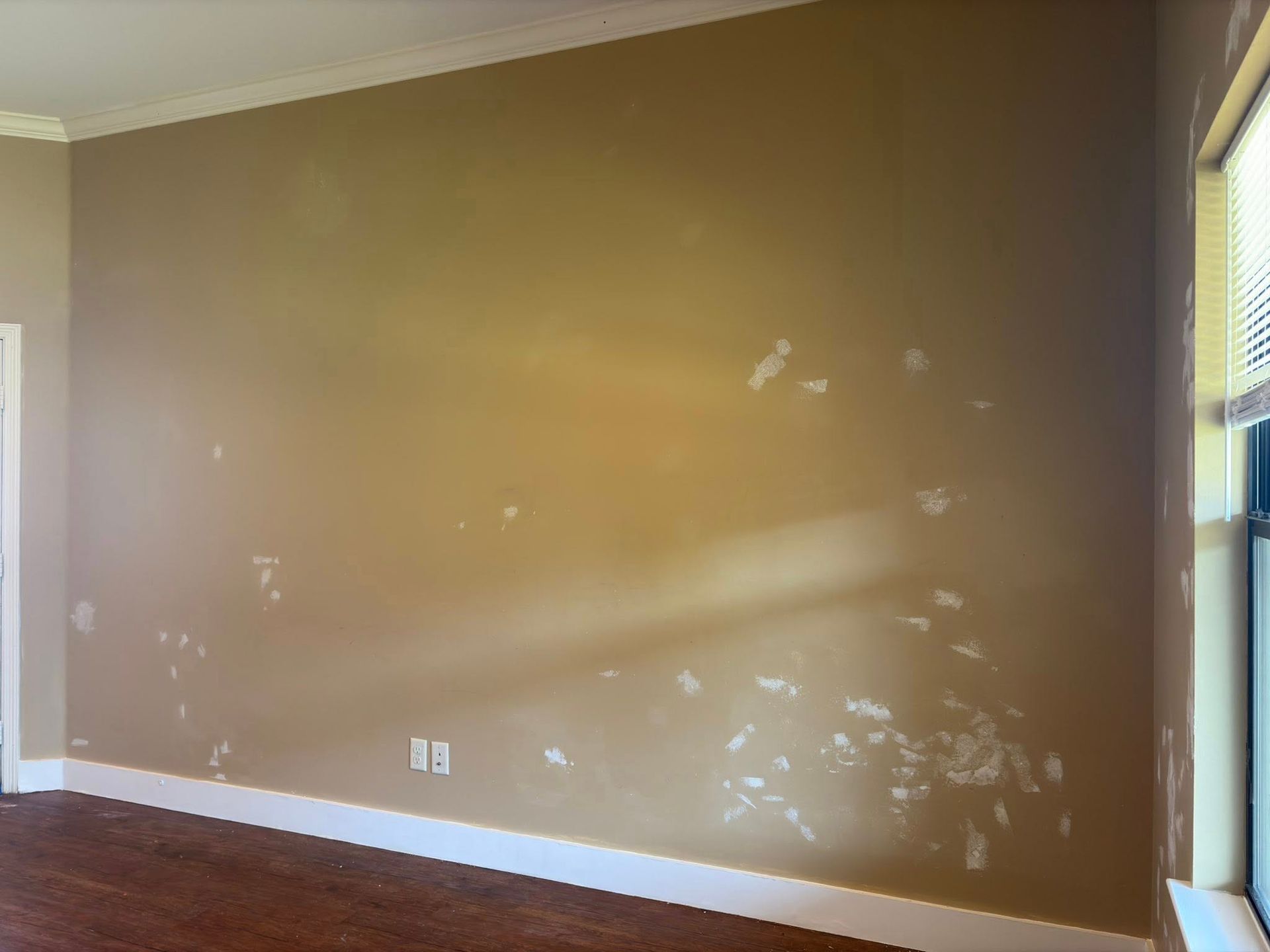
What Seamless Texture Matching Involves
Texture matching requires identifying the existing pattern—whether smooth, orange peel, knockdown, or popcorn—and replicating it with the same tools and application techniques used originally. Compound consistency, spray pressure, and trowel angle all affect the final texture, and achieving an invisible repair often requires multiple attempts and adjustments. Once texture is applied and dried, the area is primed to seal the new compound and ensure uniform paint absorption across repaired and original surfaces.
After repairs are complete, walls appear continuous without visible seams, ridges, or color variation, and surfaces respond to light the same way across repaired and original areas. You no longer see shadows or texture differences that draw attention to previous damage, and the wall is structurally sound without soft spots or flexing where patches were installed. Repainting proceeds smoothly without the new paint revealing repair locations through sheen or texture inconsistencies.
Water damage repairs may involve more extensive work if moisture has affected insulation or framing behind the drywall, requiring those elements to be dried or replaced before new panels are installed. Surface preparation after patching ensures the repaired area accepts paint identically to the rest of the wall, avoiding the common issue where patches show through as dull or shiny spots after painting.
Common Drywall Repair Questions
Homeowners dealing with wall damage often want to understand what repairs involve and how results will look once finished.
What determines whether a hole needs a patch or just compound?
Holes larger than two inches typically require a drywall patch with backing support to provide structural stability, while smaller holes can be filled with joint compound applied in layers without additional reinforcement.
How is existing wall texture replicated during repairs?
Texture is matched by using the same application method as the original—spray equipment for orange peel or knockdown, hand troweling for skip trowel, or stippling for popcorn—with compound mixed to the correct consistency for the pattern.
Why do some drywall repairs remain visible after painting?
Insufficient sanding leaves ridges around patch edges, inadequate priming causes differential paint absorption, or texture mismatches create shadows under certain lighting angles that reveal repair locations.
When should water-damaged drywall be replaced instead of patched?
Drywall showing brown staining, soft spots, sagging, or crumbling edges has absorbed enough moisture to compromise structural integrity and should be cut out and replaced rather than patched over.
What does seamless repair mean for textured ceilings and walls in Tyler homes?
Seamless repair means the texture pattern, surface level, and paint finish blend invisibly with surrounding areas so you cannot identify where the damage occurred or repair was made, even under direct lighting.
Faithful Painting completes drywall repairs with precision that makes damage disappear before repainting begins. Contact us to arrange a repair evaluation and discuss surface restoration options for your specific wall and ceiling conditions.