

Protective Coatings That Extend Fence Lifespan
Fence Painting & Staining in Tyler for wood and metal fencing exposed to sun and moisture
East Texas weather accelerates fence deterioration—intense summer sun bleaches and dries wood, afternoon thunderstorms drive moisture into unprotected grain, and humidity encourages mildew growth that discolors surfaces. Faithful Painting applies protective sealants and coatings after power washing removes embedded dirt, mildew, and failing previous finishes that prevent new products from bonding properly. This preparation step is critical because applying stain or paint over contaminated surfaces leads to peeling and premature failure, often within a single season.
The service addresses fences showing gray weathering, splintering wood, surface mildew, or faded color that detracts from yard appearance. Metal fences benefit from rust-inhibiting primers and topcoats that stop oxidation, while wood fences receive UV-blocking stains or solid-color paints depending on whether you want to preserve visible grain or achieve uniform coverage.
Schedule a property visit to evaluate your fence's current condition and discuss whether staining or painting better suits your maintenance preferences.
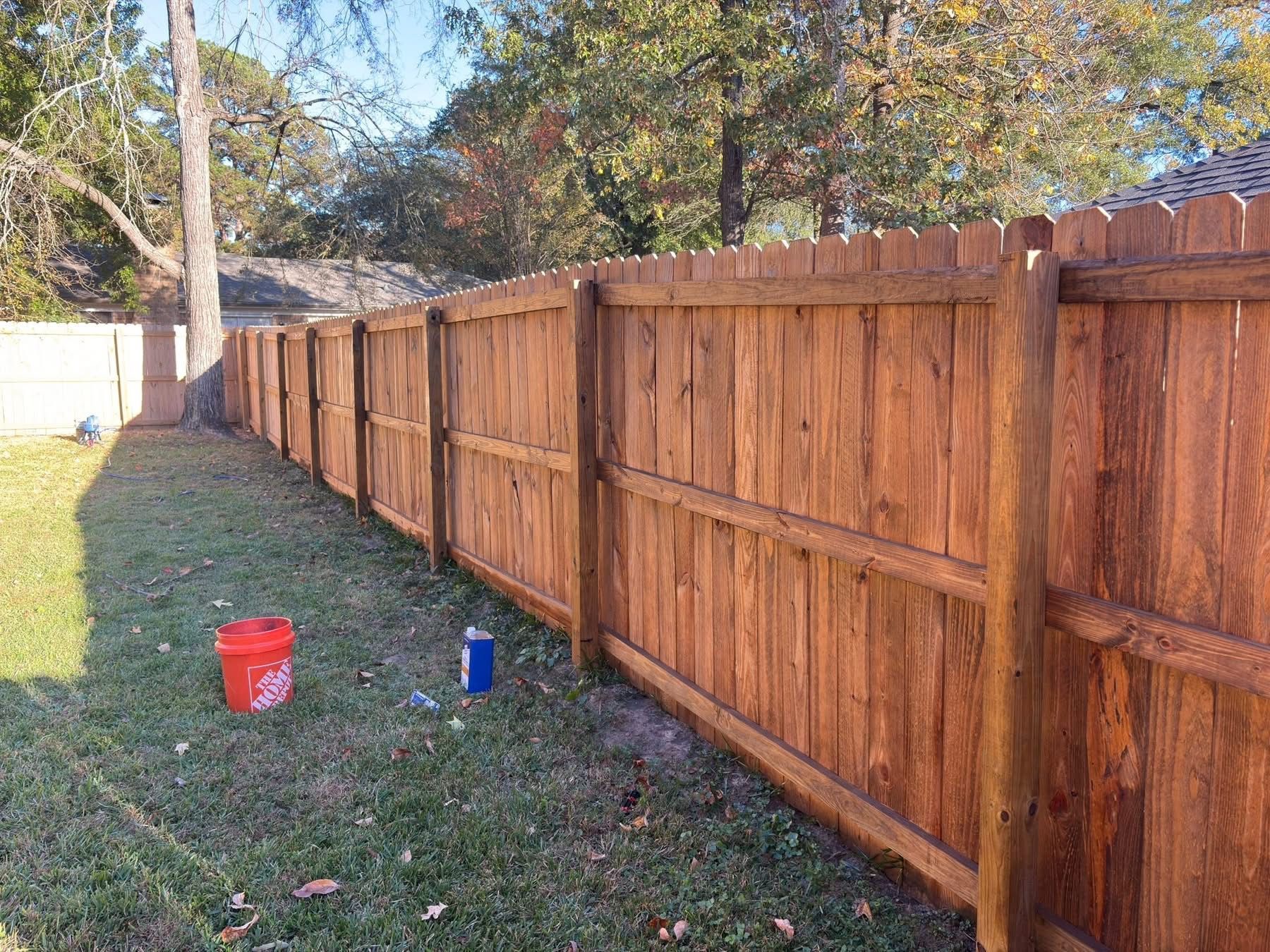
Why Surface Preparation Determines Coating Performance
Power washing removes dirt, pollen, mildew, and loose wood fibers that would otherwise create a barrier between bare wood and protective coatings, causing those coatings to peel away in sheets rather than bonding to the fence structure. Wood fences with minor surface wear—small cracks, rough grain, or splintered edges—are sanded smooth before finishing to prevent splinters and create uniform stain absorption. Metal fences receive wire brushing to eliminate rust and surface oxidation before rust-inhibiting primers are applied.
Once the fence is finished, you notice restored or enhanced color, a surface that sheds water instead of absorbing it, and wood that no longer feels rough or splintered to the touch. Stained fences display visible grain with richer, more saturated tones than weathered raw wood, while painted fences provide solid color that coordinates with home exteriors and hides variations in wood quality or patch repairs.
Protective sealants slow the return of weathering, but fences still require recoating every three to five years depending on sun exposure and whether you choose semi-transparent stains that wear faster or solid stains and paints that last longer. Faithful Painting recommends annual inspections to catch early signs of coating failure before moisture penetrates deeply enough to cause rot or structural issues.
What Property Owners Usually Ask
Homeowners planning fence restoration projects frequently need clarity on product selection and how long results last under local conditions.
What is the difference between staining and painting a wood fence?
Staining penetrates wood grain and allows texture to remain visible while adding color and UV protection, whereas painting creates an opaque surface layer that hides wood grain, covers imperfections more completely, and typically lasts longer before requiring reapplication.
How long does fence staining last in Tyler's climate?
Semi-transparent stains on fences with full sun exposure typically last two to three years before fading becomes noticeable, while solid stains and paints in shaded areas or facing north can last four to five years before needing a fresh coat.
When is the best time of year to stain or paint a fence?
Late spring and early fall offer the most consistent weather windows—temperatures between 50 and 85 degrees with low humidity allow coatings to cure properly, and avoiding summer's intense heat prevents too-rapid drying that compromises adhesion and finish quality.
Why does fence stain peel on some boards but not others?
Peeling usually indicates inconsistent surface preparation—boards that were not cleaned thoroughly or still contained moisture when stain was applied, or sections where previous coatings were not fully removed before reapplying new products over incompatible bases.
What type of finish protects metal fences from rust?
Direct-to-metal primers with rust inhibitors followed by exterior acrylic or oil-based topcoats designed for metal surfaces provide the best protection, especially when applied after removing all existing rust and oxidation through wire brushing or sanding.
Faithful Painting handles all surface preparation and applies coatings designed to withstand Tyler's heat and moisture cycles. Set up an on-site assessment to review your fence's material, condition, and the finish options that best match your aesthetic and maintenance goals.